Entry into a rental unit is governed by state law and is also required to meet Berkeley’s annual Rental Housing Safety Program requirements. This guide explains when access is permitted, how notice works, and how owners and residents share responsibility for lawful and respectful entry. Continue Reading
Knowledge Hub
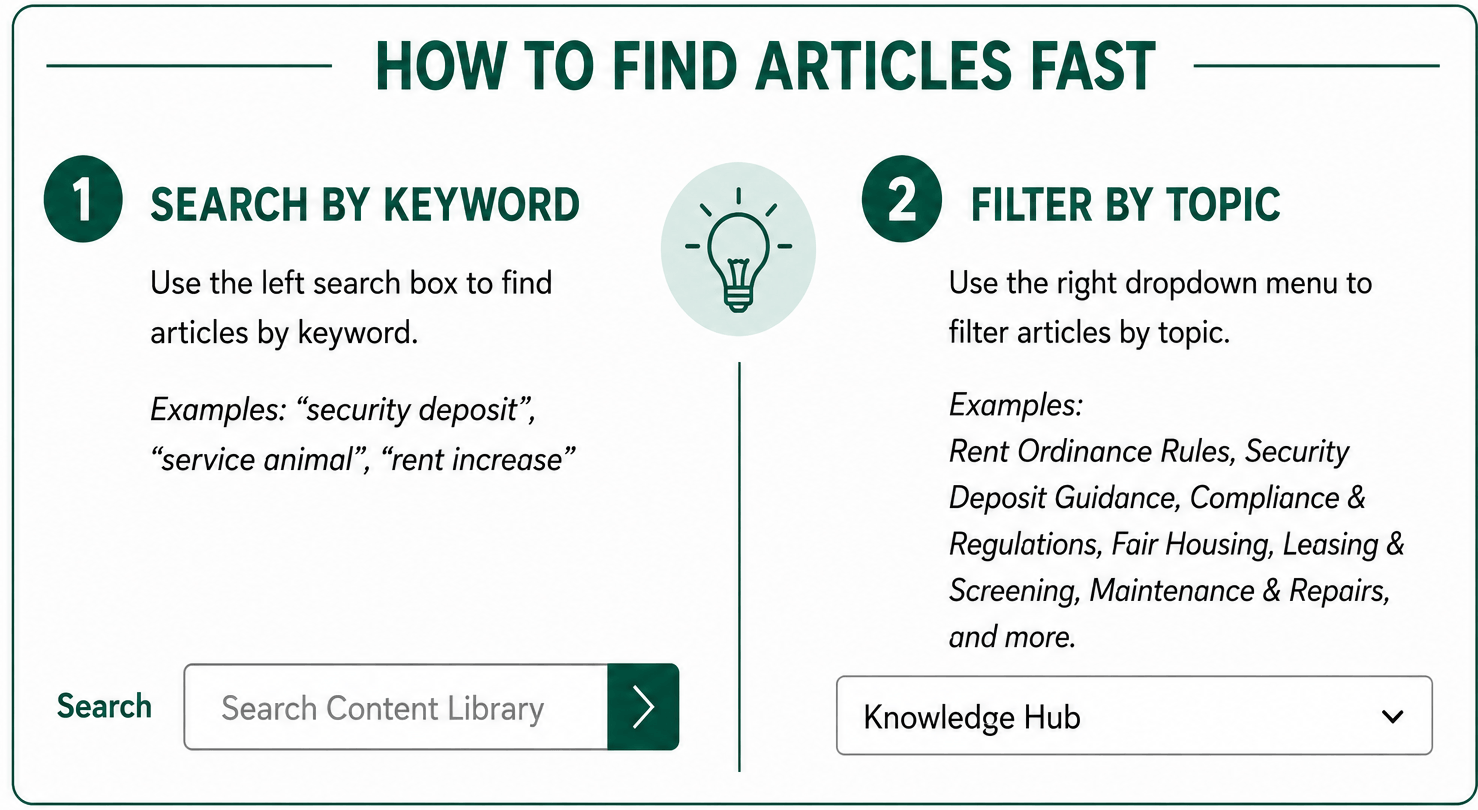
Scroll to Browse, Search by Keyword, or Filter by Topic for Fast Access
The Knowledge Hub curates BPOA’s most valuable educational resources—newsletters, articles, recorded webinars, and more—organized by topic for quick access. Whether you’re tackling a rent registration issue, preparing for move-in, or trying to understand a new regulation, this is where you’ll find topic-specific guidance, fast.
Please note: unless you use the search bar to filter by keyword, or sort by category with the topic/category filter, content will display in chronological order, with the most recent posts first.
Received a Form 571-R from Alameda County? Learn what the Apartment House Property Statement is, what must be reported, key deadlines, and how to prepare for easier filing in future years. Continue Reading
Micromobility devices like e-bikes and scooters are increasingly common in rental housing. This guide outlines registration requirements, safe charging practices, and shared responsibilities to help owners and residents reduce fire risk and maintain safe buildings. Continue Reading
Wondering what happens after you send an Intellirent application? Learn how applications are processed, what verifications run automatically, and what information housing providers still need to review before making a screening decision. Continue Reading
Screening reports are only part of the screening process. Learn what Intellirent reports typically include, what they do not verify, and how housing providers use screening data alongside their written screening criteria. Continue Reading
Required application fields are not just for convenience. Learn how complete applications support consistent screening, reduce decision risk, and help create documentation that is more defensible if screening decisions are challenged. Continue Reading
You can use Intellirent to send applications without publishing your listing. Learn when marketing syndication makes sense, when it does not, and how members can control where and how their listing appears. Continue Reading
Curious what prior landlords are asked during verification? Learn how tenancy verifications work, what questions are typically asked, and how verification responses support consistent and documented screening decisions. Continue Reading
Employment verifications help confirm income and job status, but they are only part of the screening process. Learn what employment checks typically verify and how they fit into a complete, consistent screening process. Continue Reading
Each adult applicant must submit their own application and undergo their own screening. Learn why separate applications support consistent screening, clearer documentation, and stronger defensibility if screening decisions are questioned. Continue Reading
Consistent screening protects housing providers. Learn how written screening criteria, consistent review processes, and complete documentation help reduce fair housing risk and support defensible screening decisions. Continue Reading
Screening criteria guide your process, but they do not make decisions for you. Learn the difference between building screening standards and selecting an applicant, and why housing providers must make final decisions. Continue Reading